
Modern Software’s Hidden Cost: Managing Risk in the Open-Source Ecosystem
Modern software development has shifted towards prioritising speed. Developers no longer write code from scratch; instead, they assemble applications from a vast ecosystem of open-source building blocks. However, this efficiency comes with a hidden cost: open-source security risk. A single application today may depend on thousands of indirect components, many of which are maintained not by security-conscious enterprise vendors, but by small communities or individual volunteer developers who may lack the resources to defend against increasingly sophisticated threats.

(This image was created using generative AI and reviewed under professional human supervision.)
The Hidden Risk of Open-Source
Open-source software is a double-edged sword: its greatest strengths—being public, accessible and community-driven—are also its weaknesses. Unlike proprietary code hidden behind corporate firewalls, open-source libraries are visible to everyone, including hackers. They can study the code for weaknesses or even volunteer to “develop” it as a cover for planting malware. When users install a package, they are effectively importing the security practices of every external developer involved in its development.
The risk is now widely recognised. The OWASP Top 10 Risks for Open-Source Software identifies critical weaknesses that persist throughout the software lifecycle, including inadequate security controls, outdated components and poor maintenance practices. These systemic vulnerabilities demonstrate the inherent challenges of managing open-source ecosystems and the growing complexity of mitigating supply-chain risk. Addressing these challenges requires a proactive approach to dependency management, robust update mechanisms and continuous monitoring.
Another current concern is the presence of vulnerabilities hidden within interconnected software libraries. These libraries often involve multiple layers of dependencies, many of which are not directly reviewed or audited by developers. This lack of visibility increases the risk of introducing exploitable weaknesses into the software supply chain.
The Log4Shell Incident

(This image was created using generative AI and reviewed under professional human supervision.)
In 2021, the world faced the Log4Shell incident. A critical vulnerability was discovered in Log4j (CVE-2021-44228), a widely used open-source logging utility integrated into many Java applications. The impact was extensive, ranging from core infrastructure products being left exposed to remote control by hackers to gaming servers being hijacked simply because a malicious link was pasted into a chat box. Even the Belgian Ministry of Defence was forced to shut down parts of its network.
Many compromised computers were later used for cryptocurrency mining and other follow-on malicious activity after hackers exploited Log4Shell. This consumed victims’ computing resources and significantly increased incident response costs. Cyber security reporting has placed the average incident response cost of a Log4Shell compromise at more than USD 90,000.
Because the library was so deeply embedded, many organisations were unaware that Log4Shell was present in their systems until they were already under attack. Owing to its sheer ubiquity, it is often cited as one of the most severe vulnerabilities in history.
Malicious Backdoor in Linux

(This image was created using generative AI and reviewed under professional human supervision.)
Another major open-source backdoor incident occurred in 2024 and involved XZ Utils (CVE-2024-3094), a widely used data-compression library for Linux. It was uncovered after a Microsoft engineer noticed minor performance anomalies that were inconsistent with a normal update. Subsequent investigation confirmed that this was a deliberate supply-chain compromise.
The malicious code was introduced by a developer known as “Jia Tan”, who spent two years building trust within the project before planting a sophisticated backdoor. This vulnerability allowed hackers to bypass authentication and execute remote commands on infected systems.
Fortunately, the backdoor was discovered before it reached the stable releases of major Linux distributions. Because it was identified early, the incident avoided large-scale exploitation and became a cautionary example of what might otherwise have been catastrophic.
The “Worm” in the Supply Chain

(This image was created using generative AI and reviewed under professional human supervision.)
In late 2025, a new malware strain called “Shai-Hulud 2.0” exploited the trust inherent in the open-source ecosystem to launch a novel form of attack. Unlike typical campaigns that target specific applications, this malware was a self-replicating “worm” designed to spread like a biological virus.
The attack began by disguising malicious code as legitimate packages. When a developer installed an infected component, the malware not only stole their secrets, but also used their credentials to hijack other packages they maintained automatically, republishing them in infected form to spread further.
Within days, hundreds of popular tools from major publishers, including plug-ins for Maven and Postman, had been compromised. The attack exposed more than 1,500 sensitive secrets, including AWS, Azure, GCP and GitHub tokens, effectively creating a botnet inside secure corporate networks.
This incident demonstrated that trust itself can become a vector for infection, and that credentials can be weaponised to turn trusted maintainers into unwitting attack channels.
OpenClaw: A New Frontier in Open-Source AI Risk
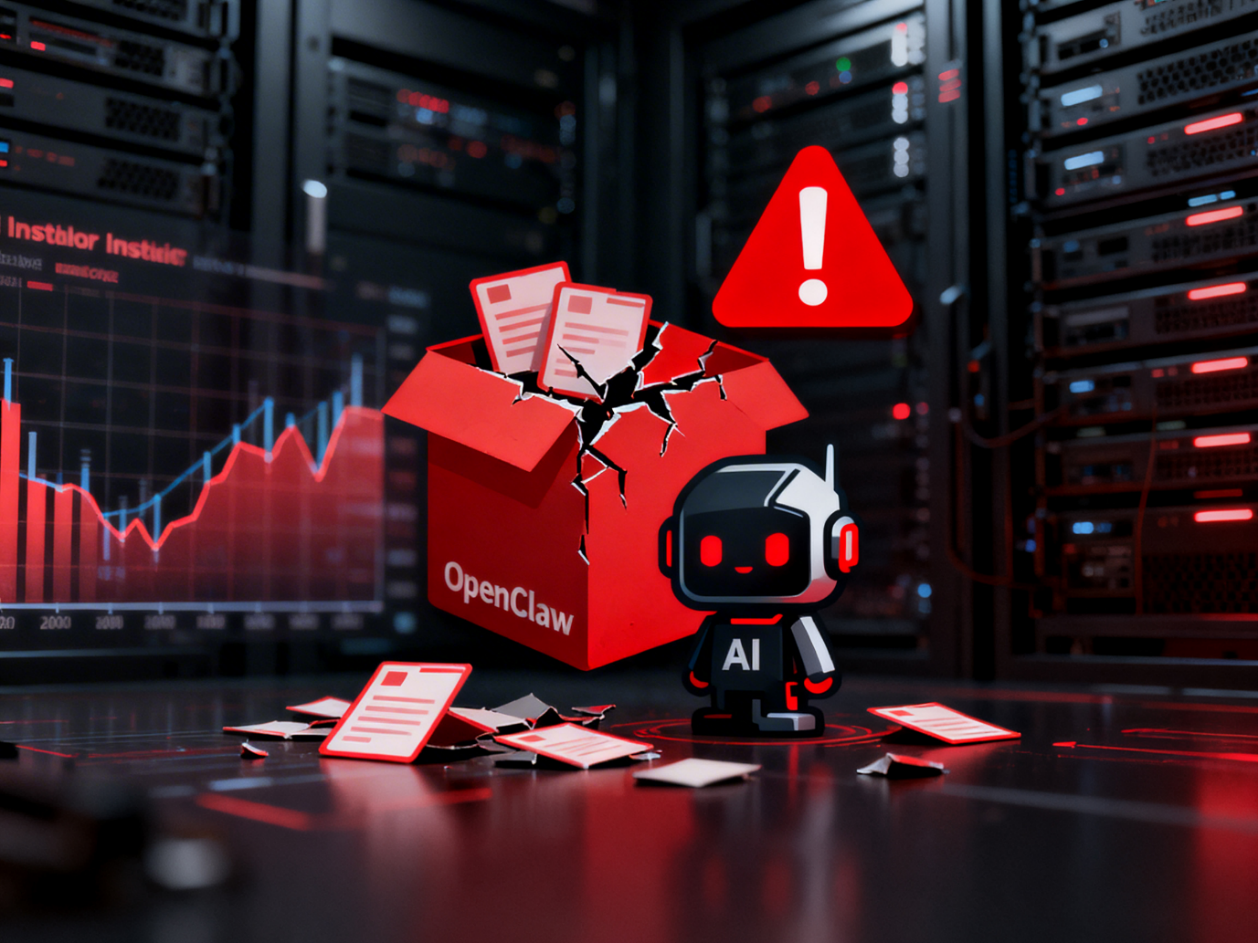
(This image was created using generative AI and reviewed under professional human supervision.)
As open-source software continues to evolve, new categories of tools—particularly AI agents—are emerging as both powerful enablers and potential security risks. One example is OpenClaw, an open-source AI agent that has gained significant traction in recent months. OpenClaw is designed to automate complex workflows, interact with APIs and perform high-privilege tasks, making it a powerful tool for developers and enterprises alike.
However, its rapid adoption has also attracted hackers seeking to distribute malicious installers disguised as official releases. This risk is partly enabled by the open-source model, which allows software to be modified and redistributed with relative ease. These threats are particularly concentrated in installer integrity, dependency management and privilege escalation. As highlighted in a recent security blog by HKCERT, the platform’s high-privilege capabilities and open-source nature make it a potential target for hackers seeking to exploit poorly secured installation processes or inject malicious code into trusted workflows through vulnerabilities.
The blog underscores the importance of verifying installers, auditing dependencies and monitoring runtime behaviour when deploying AI agents such as OpenClaw. It also calls for greater transparency from maintainers and for community-driven security practices to ensure that the platform remains secure as it grows in popularity.
This example illustrates that the security of open-source AI tools must be treated with the same rigour as traditional software. As AI becomes more deeply integrated into critical systems, the risks associated with compromised or poorly maintained open-source agents will only increase.
Preventing Open-Source Software Risk
Building a secure open-source ecosystem requires collaboration among open-source teams, organisations and operational teams. The following recommendations outline key actions that each group can take to improve security.
Open-Source Teams: Strengthening the IT Ecosystem
- Ensure transparency and clear communication: Open-source teams should provide clear documentation, including versioning, changelogs and known vulnerabilities, to help organisations and users make informed decisions. Transparent communication during security incidents is critical to building trust.
- Foster community engagement and collaboration: Encourage active participation from developers and users to ensure that the project remains well maintained and sustainable. A thriving community can help share responsibility for maintaining security, identifying issues and ensuring long-term support.
- Provide clear ownership and governance structures: Define roles, responsibilities and decision-making processes within the project. This helps organisations assess the maturity and reliability of an open-source project when considering adoption.
- Always review code changes: Implement a robust review process for all code changes, including those submitted by trusted team members. This helps prevent the introduction of malicious code and vulnerabilities. Combining automated tools with manual review can further strengthen this process.
Organisations: Building Governance and Strategic Oversight
- Treat open-source as a strategic, managed asset: Regard open-source components as integral parts of the technology stack that require sustained oversight, rather than ad hoc utilities introduced case by case. They should be managed with governance comparable to that applied to internally developed or commercial software.
- Embed open-source into assurance and governance processes: Include key open-source components within existing testing, monitoring and review activities, and recognise open-source risk as part of the organisation’s broader supply-chain and third-party risk framework. This aligns open-source use with established control structures.
- Factor security and sustainability into adoption decisions: Assess maintenance maturity, clarity of ownership and community engagement alongside functionality and cost when selecting open-source projects. Priority should be given to components that demonstrate a credible path to long-term support and security.
- Formalise third-party risk assessment before adoption: Before adopting a new open-source component, assess project activity, maintainer responsiveness, release frequency, security history and community health. Components that are poorly maintained or lack clear ownership may introduce unacceptable risk; open-source selection should therefore be treated as a security decision, not only a technical or cost decision.
- Prepare incident response plan for open-source vulnerability and supply-chain incidents: Establish response procedures for open-source vulnerabilities and supply-chain incidents, including identifying affected systems, assessing impact, communicating with stakeholders and deploying mitigations when major vulnerabilities are disclosed.
Operational Teams: Managing Dependencies and Risk
- Maintain clear and continuous dependency visibility: Ensure there is an up-to-date understanding of which systems rely on which open-source components. This enables timely and accurate assessment of organisational exposure during vulnerability disclosures or supply-chain incidents.
- Design for resilience against dependency disruption: Plan for the possibility that critical components may become vulnerable, compromised or discontinued. Systems and operational processes should be designed so that mitigation, rollback or replacement of dependencies can occur without causing disproportionate business impact.
- Maintain a Software Bill of Materials (SBOM) for critical systems: An SBOM provides a structured inventory of software components and dependencies, enabling organisations to quickly identify exposure when new vulnerabilities or supply-chain incidents emerge.
- Implement continuous vulnerability monitoring and rapid patch management: Continuously monitor open-source components and establish clear processes for evaluating and deploying security updates. Organisations should define acceptable remediation timelines for critical vulnerabilities and ensure that patching responsibilities are clearly assigned.
- Use trusted package sources and verify authenticity: Obtain software packages only from trusted sources and verify their authenticity wherever possible. Cryptographic signatures, checksums and trusted repositories can reduce the risk of installing tampered or malicious packages.
- Apply the principle of least privilege: Limit the privileges granted to applications, development tools and automation platforms. Restricting permissions can significantly reduce the impact of compromised dependencies or malicious packages.
- Protect sensitive data and credentials: Use secure secrets-management solutions and avoid embedding API keys, tokens or passwords within source code repositories. Sensitive credentials should be rotated regularly and kept monitoring for unauthorised access.
Conclusion
Open-source is the foundation of modern software, so our security posture depends on how we choose, trust and operate code shared with the community. The incidents above show that the open nature of this ecosystem—from maintenance by volunteer developers to deeply nested reuse—can turn a single project into a hidden entry point across thousands of downstream systems.
Change must begin within the open-source community, with stronger security practices and clearer accountability. Greater trust between users and developers can be achieved by prioritising security, strengthening the community’s reputation, ensuring the long-term sustainability of its projects and creating a safer ecosystem in which each layer reinforces the security of the next.
Open-source security is a shared responsibility. Maintainers, software vendors, organisations and end users all play a role in protecting the software supply chain and ensuring that innovation does not come at the expense of security.
As AI agents such as OpenClaw become more prevalent, the need for secure-by-design open-source practices has never been more urgent. The lessons of past incidents must guide us towards a future in which open-source innovation and security go hand in hand.
References:
- OSWASP: OWASP Top 10 Risks for Open Source Software [owasp.org]
- Oracle: Oracle Security Alert Advisory - CVE-2021-44228 [oracle.org]
- The Register: Belgian defence ministry admits attackers accessed its computer network by exploiting Log4j vulnerability [theregister.com]
- Arctic Wolf: A Log4Shell (Log4j) Retrospective [arcticwolf.com]
- Red Hat: CVE-2024-3094 [redhat.com]
- GitHub: xz-utils backdoor situation (CVE-2024-3094) [github.com]
- Microsoft: Shai-Hulud 2.0: Guidance for detecting, investigating, and defending against the supply chain attack [microsoft.com]
- Check Point: Shai-Hulud 2.0: Inside The Second Coming, the Most Aggressive NPM Supply Chain Attack of 2025 [checkpoint.com]
- HKCERT: OpenClaw’s Rapid Adoption Exposes Skills Supply Chain and Fake Installer Risks in a High-Privilege AI Agent Platform [hkcert.org]
Related Tags
Share with